A beloved Christmas carol with intriguing origins. Was it written by Martin Luther? Did a Methodist Sunday School man write the third verse? Find out here, and also hear a touching personal story about the enduring power of this hymn in a local care facility, before singing two popular versions with me at the end.
Christmas is around the corner, so for today's Friday Classic Hymns episode, let's look at one of the great Christmas songs: "Away in a Manger". I have sung the song every year for as long as I can remember - at Christmas carol services, at Christmas services at church, at home at the piano, listening to recordings - all sorts of variations. It's just one of those great Christmas songs that's everywhere around this time of year.
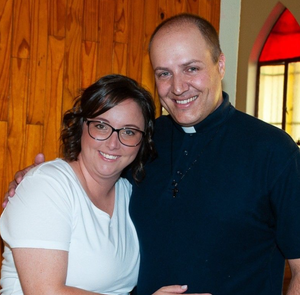
In fact, just this morning I was out doing some ministry at a local care facility called Cedar Manor in Benoni, which cares specifically for people with dementia. I sang a bunch of carols for the residents, and it amazed me that these folks, many of whom can't speak anymore and have got terrible memory loss, could remember most of the carols. They would either mouth along or in some cases actually sing - it was so touching. I'll never forget one man who just closed his eyes tight and sang the song as I sang "Away in a Manger". I looked up and he was singing so passionately, and I thought, "I need to do a Friday Classic on this song."
Would you please share your memories and your impressions of this song in the comments below? I'd love to hear your stories and what the song means to you. If you find value in these hymn videos, please give the video a thumbs up and subscribe to this channel - those little things help this channel reach out to more people. Thank you.
The Story Behind "Away in a Manger"
As it turns out, the authorship of "Away in a Manger" is quite a mystery. For years it was falsely claimed that Martin Luther, the great German reformer, wrote this song. In many hymnals around the 1900s, the song was called "Luther's Cradle Hymn", and some stated that he wrote it for children and would sing it at Christmas time with them in the 16th century.
But many researchers, such as Richard Hill and others, have found that this is not true. Scouring through Luther's writings, they find nothing that comes even close to this hymn. Instead, "Away in a Manger" was first found in a German Lutheran hymnal in America in the 1880s. Originally there were only the two verses, and it was definitely thought of as a children's song. It seems that perhaps the Lutherans of the time sentimentalised this vision, this picture of Luther singing this with his family or with the children in his community, but nobody could figure out who wrote the words - and still nobody knows.
Even the third verse has some controversy around it. Nobody's quite sure who wrote it. A man named John Thomas McFarland claims to have written it in the early 20th century. He is said to have taken the old original with the two verses and written a third verse for his children's ministry. But others claim that this can't be the case because even in the 1890s this third verse started appearing in certain publications. So was he lying, or was he misremembering the dates later when he told the story? Who knows.
Whoever the author was, the song grew in popularity and it's particularly well known for being set to two different tunes: James Murray's tune called "Mueller", and then a tune by the famous William Kirkpatrick, who wrote a lot of music around the time. He wrote one of the most popular tunes. In fact, it's been set to over 40 different tunes, but those are the two popular ones and we'll sing them at the end of the video.
Despite all of these uncertainties around the song, this is a precious one, isn't it? In the end, it doesn't matter who wrote it because we have the great privilege of singing these beautiful words every Christmas time.
What Do the Lyrics of "Away in a Manger" Mean?
There are some variations on these words and we'll have a look at them.
Verse 1
Away in a manger, no crib for a bed,
the little Lord Jesus laid down His sweet head.
He wasn't placed in a beautiful royal crib, but rather He put His sweet head down in a manger.
The stars in the bright sky looked down where He lay,
the little Lord Jesus asleep on the hay.
Just a beautiful, sentimental picture of Jesus as a child being placed in the manger. Oh, it doesn't get better than this. It doesn't get more Christmassy than this. It immediately starts to feel like Christmas just as you read those words.
There are some variations. For example, the first line in some sources - in the earlier sources in fact - says "no crib for His bed", and some hymnals will say "lay down" instead of "laid down". Some will say "lay down His wee head" apparently. In the third line, not every hymnal says "bright sky" - some say "the stars in the sky look down where He lay", and in fact others even put "heaven" instead: "the stars in the heaven" or "in the heavens". But it seems as if Kirkpatrick was the first one to say "the stars in the bright sky" when he published it in 1895. Some say "asleep in the hay", some say "asleep on the hay". These are all little changes that don't really mean much to our understanding, but I'd love to know which ones do you sing? Do you sing one of these variations?
Verse 2
The cattle are lowing, the baby awakes,
but little Lord Jesus, no crying He makes.
Here you have this picture of these animals around the manger. It's probably not true that there were cattle there - there may have been sheep since the shepherds were around, but cattle is probably not the case. But that's a picture sometimes of the nativity, isn't it? The animals huddled around the manger as well, since Mary and Joseph were kind of out in the stable. But others would say that no, it wasn't a stable like we would understand stables today - it was more like a cave in the back. So maybe there were animals there.
Some like to think that the sheep that may have been around the manger could represent how God's sheep, His people, gather around His throne and worship Him as the great Shepherd. So there might be some beautiful symbolism there.
But this idea that Jesus awakes but doesn't cry - that's also an odd one. He was a normal human being. He was divine of course - He had the two natures. He was fully human and fully divine. It's not unreasonable to think that because He was fully human as a baby, He would have cried. So perhaps this is again over-emphasising the divinity of Christ instead of recognising His humanity as a crying baby. On the other hand, the image of the peaceful Jesus who, even as He awakes to the sound of animals, is still at peace - well, that's also an interesting thought: that Jesus is always at peace, isn't He?
I love Thee, Lord Jesus, look down from the sky,
and stay by my cradle till morning is nigh.
I know it is "and stay by my side until morning is nigh" in some versions. In fact, some of these other words in verse two are also different - some say "the cattle are lowing, the poor babe awakes", maybe you remember that.
But getting back to those last two lines: look down from the sky and stay by my cradle till morning is nigh. Now the perspective kind of shifts to Jesus as ascended and at the right hand of the Father, looking down, and also living with us - the Holy Spirit staying with us, by our sides or by our cradles as children, all through the night. Beautiful.
Verse 3
This verse maybe was written by Mr McFarland, or maybe not.
Be near me, Lord Jesus; I ask Thee to stay
close by me forever, and love me I pray.
I always love singing that. Isn't that our cry, day after day? "I ask Thee to stay close by me forever and love me I pray" - what a lovely thing for children to be singing.
Bless all the dear children in Thy tender care,
and take us to heaven to live with Thee there.
Some other publications have it as "and fit us for heaven to live with Thee there". "Take us to heaven" seems a little bit like a prayer for death, which surely we shouldn't be praying. But "fit us for heaven to live with Thee there" is, I suppose, more about readying us for the day when it does come - seems a little bit less direct.
A beautiful prayer for God to bless all the dear children. Whenever we sing this at our carol services, normally my friend Rich sings it and he gets all the kids to come forward. Then he will normally say, "But we can all sing because we're all children of God." So when we're asking Him to bless all the dear children, yes it's our little ones who haven't grown up yet, but it's for all of us - dear children who are loved by God.
Conclusion
Which words have blessed you today as we've gone through it? Did something jump out at you and really touch your heart? I love this song and I'm looking forward to singing it with you now in both variations. I'd love for you to share which one you know, which one is more common for you to sing in your part of the world or in your congregation.
Thank you for joining today, and as always, a big thank you to those who support me on Patreon, where you'll get all these hymns in MP3 format and all the other music that I release as well to download. I'm so grateful for your support as I do the work here in the studio, in addition to pastoring the little church that I do. God bless you guys, and sing this one with me and feel the Christmas spirit well up as you do.
References
Hill, R.S. 1945. "Not So Far Away in a Manger". Music Library Appreciation Notes, Second Series, Vol III, No 1. https://www.hymnsandcarolsofchristmas.com/History/away_in_a_manger.htm