Today we explore the touching story and timeless message of "Blest Be the Tie That Binds," a beloved hymn born from Pastor John Fawcett's remarkable decision to choose his impoverished Yorkshire congregation over a prestigious London position in 1782.
Today's Friday Classic Hymn has a touching story about brotherly love - it's really a special one. I don't know the song; it's a new one to me, but maybe you know it: Blessed Be the Tie That Binds. What a special song!
If you like classic hymns and enjoy singing "Blessed Assurance", "Amazing Grace", "How Great Thou Art", and "Great Is Thy Faithfulness", I'm sure you're going to enjoy this channel. If you like modern hymn writers as well, like the Gettys and CityAlight, I think you'll also enjoy what I do here. Join me on a Friday for a new classic hymn study like this one, and on a Sunday night for some time of worship together. If you know this song, "Blessed Be the Tie That Binds", why don't you subscribe to the channel and share your story and your memory of this song in the comments below? I'd love to read how this one has touched your life.
The Story Behind "Blessed Be the Tie That Binds"
John Fawcett was born in Yorkshire, England, in 1740. At the age of 12, he was orphaned and had to work long days as a tailor's apprentice in London. But even in these harsh circumstances, Fawcett forced his way forward, read a lot of early Christian material like The Pilgrim's Progress, and at the age of 16 actually became a Christian under the preaching of George Whitefield, the famous evangelist of those times.
He ended up becoming ordained and going into the ministry in the Baptist Church. In 1766, he was placed in a small church in Wainsgate. This was not a very rich church - in fact, they could hardly afford to keep this young man and his wife as their pastor. But he faithfully did his duty and came to really love the people of that community. One of the stories is that the church was so poor that one year they wanted to give him a raise but couldn't, so they asked if they could give him a raise in potatoes and wool, just to try and support him a little more. But Fawcett took it all in his stride and kept pastoring the church with love.
He was a very talented preacher, and news spread about this young man and what he could do for a church community. Soon enough, he got a call to go and pastor a big church in London. Off he went, did the trial service, was very well received, and this church invited him to become their minister.
The day came for him and his family to leave his church in Wainsgate, and the whole congregation came out to see them off as they had their big wagon packed and were about to take off for London. The scene that followed was quite something. The villagers began to weep and wail as they came to realise that this was the last time they would see this beloved pastor and his wife. As the pastoral couple dealt with all these people crying and clinging on to them, they looked at each other and realised they couldn't leave this place. They had so deeply invested their lives into the lives of these precious people of this church. Overwhelmed by emotion, they decided instead to stay. They started to unpack their wagons and stayed at this church that still couldn't afford them, but that loved them so.
Sometime later - it could have been the next Sunday, but other resources say it was a little bit later - Fawcett arrived in the pulpit to preach, and he'd written a poem: "Blessed Be the Tie That Binds". He called it "Brotherly Love", and it was a beautiful song about this love that he'd experienced in this community. He stayed even though this church couldn't pay him more than £200 a year, which wasn't very much in those days.
He became known as one of the great preachers and one of the great Christian scholars of the time. He wrote essays that were very well received. In fact, King George III was so impressed with one of his essays that he invited Fawcett to come and meet him and receive an honour from the king. But Fawcett replied and said anything that he needs, he gets from his own congregation, and he ended up not going to meet the king - a humble man who knew what Christian love was all about.
There are great stories about how this hymn has touched communities around the world. A missionary in Turkey once also really got to know a group of people very well, but when he was called elsewhere, he left in a very similar way to Fawcett, with lots of people around him crying and sad to see him leave. But they all gathered and sang this song as he walked the streets and left - a beautiful story.
D.L. Moody, the great evangelist, tells a story about how the most moving visit that he ever had was going to see a man who had been diagnosed with a terminal illness and had been told by the doctors to move down to the coast where he could rest and hopefully get some good air in his lungs. He went to visit this man the day of his departure, and all of his family was there, his friends, and all of his pupils - because he was a Sunday school teacher. The whole group of people around this man's bed was devastated at the thought of him going. Moody talks about how together they sang this song and how it was the most emotional visit he'd ever been on, but how he left it just so touched by the verses that spoke of the togetherness that we have even if we part ways. Beautiful stuff.
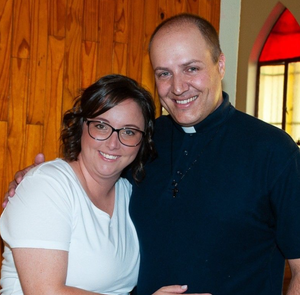
I read this hymn this week and started to learn it for the first time, and I was just moved. It made me think about my own role. I started at this Church of the Nazarene in Boksburg just over two years ago, and there were maybe 10 or 15 people at the time when we started the English service. Now we're up to about 100-110 on a Sunday, which is lovely - it's beautiful to see it grow. But what I'm finding is it's harder and harder to keep in touch with everybody in the church as it grows. When we were small, we were close, but now keeping in touch with all the people in this church is a challenge. But I long to do it because I don't want to just be a teacher who disappears and who nobody has anything to do with. I want to love my congregation and care for them and to know that these words about the tie that binds us together are true. I want to know it by experience, and I do - I love the people of my church so dearly, and I want to always have that deep love and have them love me in return.
It's so special to be in a church community. Do you know a church where these words are true, where the ties that bind you are so strong?
What Do the Lyrics of "Blessed Be the Tie That Binds" Mean?
Let's take a look at the words that Fawcett wrote.
Verse 1
Blest be the tie that binds our hearts in Christian love;
the fellowship of kindred minds is like to that above.
I love this. The tie that binds us together, which is the tie of God's love, is a blessing - it's a blessing to us. This fellowship that we have with kindred minds, with minds that are united as Christian family, is like to that above. It's similar to the bonds that hold the Trinity together. Have you ever thought about that? God - Father, Son, and Spirit - are perfect community, and they're also bound together with a tie of love. In a church, when we have this unity among us, it's similar to the unity of Father, Son, and Spirit.
Verse 2
Before our Father's throne we pour our ardent prayers;
our fears, our hopes, our aims are one, our comforts and our cares.
Together as a church, as people of God, we pray earnestly. Everything we share - we share fears, hopes, aims or goals, comforts and cares. This is the beauty of church life: we bring these together and we share them, and we kneel before the Father's throne and bring these things to Him together.
Our prayer ministry at our church is so precious to me because I know that our prayer warriors are praying and lifting us up, praying for these types of things in the life of our church. But every Christian and every churchgoer should be praying such things generally for their own church. I love the unity of the church that he's pointing out here.
Verse 3
We share our mutual woes, our mutual burdens bear;
and often for each other flows the sympathising tear.
When you're sad, you're sad with your church. When you are burdened, you bear those burdens together with the people in your congregation. This is why church is important. Often for each other flows the sympathising tear - yes, in church we cry with each other as we go through difficulties and burdens. But that's why we have church: because we don't want to try to live the Christian life alone.
Verse 4
When we asunder part, it gives us inward pain;
but we shall still be joined in heart, and hope to meet again.
Think about Fawcett leaving and then experiencing this pain as he was about to leave. Think about that missionary and about that Sunday school teacher, and how leaving their congregations, their Christian brothers and sisters, was a time of inward pain. It felt like they were being torn apart. But we shall still be joined in heart and hope to meet again. Even if we do leave and go to different parts of the world, and even if we die - here's the other thing - we will still be joined in heart and meet each other again. Beautiful.
Conclusion
What a beautiful song! What words have spoken to you as you've heard these lyrics today? For me, the whole thing has just been a reminder that our church community needs to be a place of unity and shared love. Yes, sometimes we don't see eye to eye, but this is not going to stop us from loving each other, caring for each other, and bearing each other's burdens. Please share your thoughts in the comments below.
I want to thank you for caring for me by donating on PayPal and on Patreon. I'm deeply touched by your generosity in supporting the work that I do here in the studio. Thank you very much for that. By the way, those who support me on Patreon get downloads of all the stuff that I do, so you can check that out if you like.
Let's sing the song together and sing it with your church congregation in mind, thinking about how you can bring this type of love to your church congregation from now on.
References
McLelland, J. 1994. The Ambassador Book of Great Hymn Stories. Ambassador Productions Ltd: Belfast
Osbeck, K.W. 1985. 101 Hymn Stories. Kregel Publications: Grand Rapids
Parachin, V. 1987. The Hymn That Became a Benediction. Herald of Holiness Vol. 87 No. 2. Nazarene Publishing House: Kansas City
Image source: John Fawcett - Wikipedia