How Deep the Father’s Love For Us
Stuart Townend's wonderful song sounds like it may have been written a century ago, but it's only 30 years old. Hear why he felt called to write a hymn, and consider how perhaps one of the lines might not be the right thing to be singing.
Welcome back to Friday Classic Hymns. Today we're doing another modern classic - one of those modern Christian songs that sounds like it was written 150 years ago, but it actually wasn't. It's only 30 years old.
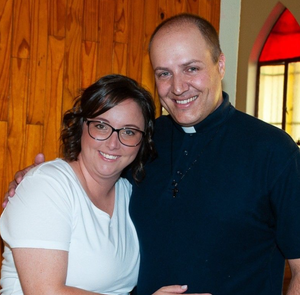
My memory of "How Deep the Father's Love For Us" is of a Philips Craig and Dean album. We loved this album and learnt many of these songs for our church when I was growing up. This song was on that album and we loved singing it. I especially loved singing it with my friend Gavin, and you'll hear us sing it a bit later.
What do you know about this song? Do you have any recollections of it? Any memories? Does it mean something to you? Share those thoughts in the comments please. If you haven't subscribed to the channel, I hope that you will do that.
Let's talk about "How Deep the Father's Love For Us".
The Story Behind "How Deep the Father's Love For Us"
Stuart Townend wrote this song, and I've already spoken a little bit about him in my video for "In Christ Alone", which he co-wrote with Keith Getty. Stuart was born in 1963. His father was a priest in the Church of England. He began learning piano at a young age, and after making a commitment to Christ himself at the age of 13, began writing Christian songs in his early 20s.
Unlike his father, Stuart didn't feel a call to ministry, so he began studying English literature at university. But his songwriting really started to take off and to have a place in the local church. One of the things that he wanted to do as he began writing songs was to write songs that were God-focused rather than us-focused. In one of the interviews with him that I read, he spoke about how it's dangerous for us to sing words that are very self-centred, and that at that time the songs of the church tended to be a little bit self-centred. He wanted to write a God-focused song. In particular, he actually wanted to write something that felt like a hymn.
Look at these words from his own website about the story behind this song. He said, "Writing the song was an unusual experience for me. I'd already written quite a few songs for worship, but all in a more contemporary worship style. But I distinctly remember getting this feeling one day that I was going to write a hymn. I'd been meditating on the cross and in particular what it cost the Father to give up His beloved Son to a torturous death on a cross, and what was my part in it. Not only was it my sin that put Him there, but if I lived at that time it would probably have been me in the crowd shouting with everyone else, 'Crucify Him!' It just makes His sacrifice all the more personal, all the more amazing, and all the more humbling."
He goes on: "As I was thinking through this, I just began to sing the melody and it flowed in the sort of way that makes you think you've pinched it from somewhere. So the melody was pretty instant, but the words took quite a bit of time, reworking things, trying to make every line as strong as I could. Now I'm finding it gets used all over the world by all sorts of churches. It seems to be as accessible to a traditional church as it is to a house church, and I'm excited by that. But it has perhaps branded me as an old man before my time. It was fed back to me that at a conference a couple who loved the song were surprised to hear I was still alive."
Yes, it does have that hymn feel. That's what he was going for, although that's not what he was known for at the time. He wrote contemporary stuff but wanted to write something hymn-like. In fact, he also said at another place that it was "Amazing Grace" that he was thinking of when he wrote this. He wanted something with that same kind of humble feel to it.
In the mid-90s the song was published. Townend began using it at his church, and with modern media being what it is, it has spread. There are so many different versions online. As I said, I first heard it through Philips Craig and Dean's version. Everybody sings the song, it seems, because it is so beautiful and so worth singing - helping us to contemplate the cross in a particular way.
Let's take a look at the words that Stuart Townend wrote.
What Do the Lyrics of "How Deep the Father's Love For Us" Mean?
Verse 1
The song begins: "How deep the Father's love for us, how vast beyond all measure, that He should give His only Son to make a wretch His treasure."
The love of God is so deep. I love that opening line - "deep" and "vast". He's using expansive terms, trying to explain a great size that you can't really measure. Of course, it reminds me of John 3:16 - God so loved the world that He gave His only begotten Son.
John also says in his writings, "See what deep love the Father has lavished on us that we should be called children of God." We know it was the death of Christ that enabled us to become children of God. Just think of how deep and vast is His love that He would sacrifice that we, His children, may benefit from His pain.
That line, "to make a wretch His treasure", always gets me. Jesus was dying a very exposed and humiliating death on the cross. He was seen as a wretch, as a nobody, as a failure. But He was actually God's great treasure - God the Father's treasure - and our Saviour.
Now the next line is the controversial one in the eyes of some. We read: "How great the pain of searing loss, the Father turns His face away."
Of course, the thinking is Jesus crying out, "My God, why have You forsaken me?" This was a prayer that He was quoting from Psalm 22. David wrote a psalm that began like that, so Jesus was quoting it. He obviously felt utterly abandoned at that moment, in the depths of His pain.
In an article on thebereantest.com, Vince Wright did a pretty thorough analysis of this hymn. It's definitely worth reading. He claims that this is not a good line because the Father didn't turn His face away. There's a particular view that God did abandon Him and that He turned His face away, and Jesus felt absolutely abandoned by the Father because God's eyes cannot look upon sin. When He looked at Jesus and saw that He was carrying the sin of the world, a holy God couldn't look at such a sight.
But that seems to fly in the face of much of what Scripture says about God loving in spite of sin and offering redemption in spite of sin. In fact, in the very same Psalm that Jesus is quoting from - Psalm 22 - there is this verse. Read this: "He has not despised nor abhorred the affliction of the afflicted, nor has He hidden His face from him; but when he cried to Him for help, He heard."
Jesus, like David, felt abandoned in His human condition of pain. But the psalm assures us that the Father didn't abandon Jesus but gave Him the strength to carry on through it. God never looks approvingly upon sin - that's what the Bible claims in other places - that God will never look upon sin with approval. But certainly, His beloved children, and above all His begotten Son, are never abandoned by Him. Even in our deepest pain, He is with us and He stays with us.
The song goes on: "As wounds which mar the Chosen One bring many sons to glory."
The wounds that Jesus was marred by brought us glory - sons and daughters - but brought us the glorious redemption, reconciliation back to God. We praise Him for what He did on that cross.
Verse 2
Verse two goes like this: "Behold the man upon a cross, my sin upon His shoulders."
That's what Jesus did. He carried our sin on His shoulders, didn't He? I like that word "behold". I actually preached a Good Friday message at my church about beholding the Lamb of God. It's like, take the time to look and think about what He's done. Don't just go past and let Him go into your background, but behold Him. Think about Him. Take cognisance of what He did on the cross. Behold the way that He died for you, and how deeply He loved you. He took your sin on His shoulders so that you don't have to receive the punishment that you deserve. That's what He did.
The song goes: "Ashamed, I hear my mocking voice call out among the scoffers."
Townend said this about this song - that he wanted to figure out his role in the whole thing. He realised that if he had been there that day, there's every chance he may have been scoffing and mocking Jesus because he didn't understand what was going on.
Of course, redemption is still possible for those who stood there and mocked. In fact, remember how Jesus offered forgiveness or called out for the forgiveness of those who had beaten Him? He said, "Forgive them, Father, they know not what they've done."
Maybe you have had a season in your life where you mocked Him. Maybe you are in that season now. He is willing to forgive. He's so willing to forgive that He takes that death and dies in our place so that we could be free.
"It was my sin that held Him there until it was accomplished. His dying breath has brought me life - I know that it is finished."
I've heard many preachers say it wasn't the nails that held Him to the cross - it was His love that kept Him up there. But Townend here is saying it was our sin that held Him up there. Our sin was so deep that it nailed Him to the cross. But of course, He stayed there out of love, even though He could have called the armies of angels down from heaven, as He said in the Garden of Gethsemane. He carried on and walked that road that He was called to walk because it would mean redemption would be possible for all. He cried out, "It is finished" at the end, as you probably know. As He breathed His last breath and it was finished, redemption was made possible.
Verse 3
Then verse three says: "I will not boast in anything, no gifts, no power, no wisdom; but I will boast in Jesus Christ, His death and resurrection."
I love that. Instead of me uplifting myself or taking pride in anything that I've done or that God has gifted me with, it is Christ's death on the cross that is my sole reason for worship, my sole boast - His death and His resurrection. He introduces here His resurrection because even though redemption was finished on the cross, the resurrection vindicated the work that He did.
"Why should I gain from His reward? I cannot give an answer."
I cannot give an answer. I love that section. I love singing those words because I also have this question sometimes: why would God allow me to gain from what He did? I don't know. Of course, I know in a sense it's because He loves us and because He loves us so much that He provided this for us. I gain His reward not because of what I've done but because of what He's done. It's called grace. It's not something I've earned - it's something that's been given as a gift.
Do you know God's grace? Do you know what He did for you?
"But this I know with all my heart - His wounds have paid my ransom."
The song ends: His wounds have paid my ransom. Even though I don't know why He would do such a wonderful thing, I know that His wounds on that cross paid my ransom. Of course, Jesus said that He came to give His life as a ransom. When He died, He essentially paid our debts so that we could go free.
Conclusion
A wonderful song. A very beautiful song. I always love singing it.
What words have stuck out to you today? Have you been blessed by them? Has God spoken to you in some way as you've heard these words today? Don't leave the video without worshipping, without praising God for what He's done for us.
Let's sing it together. But before we do, just a big thank you for those who donate on PayPal and Patreon. My Patreon supporters get downloads of all the stuff I do - all the songs in MP3 format - so you're welcome to check that out. Just thank you to you for generously giving to me. It allows me to spend the time to do this and to get other people involved - editing and doing all sorts. Thank you very much.
Gavin and I are going to sing it, and I hope you'll sing with us.
[Performance follows]