
Baruch the Scribe
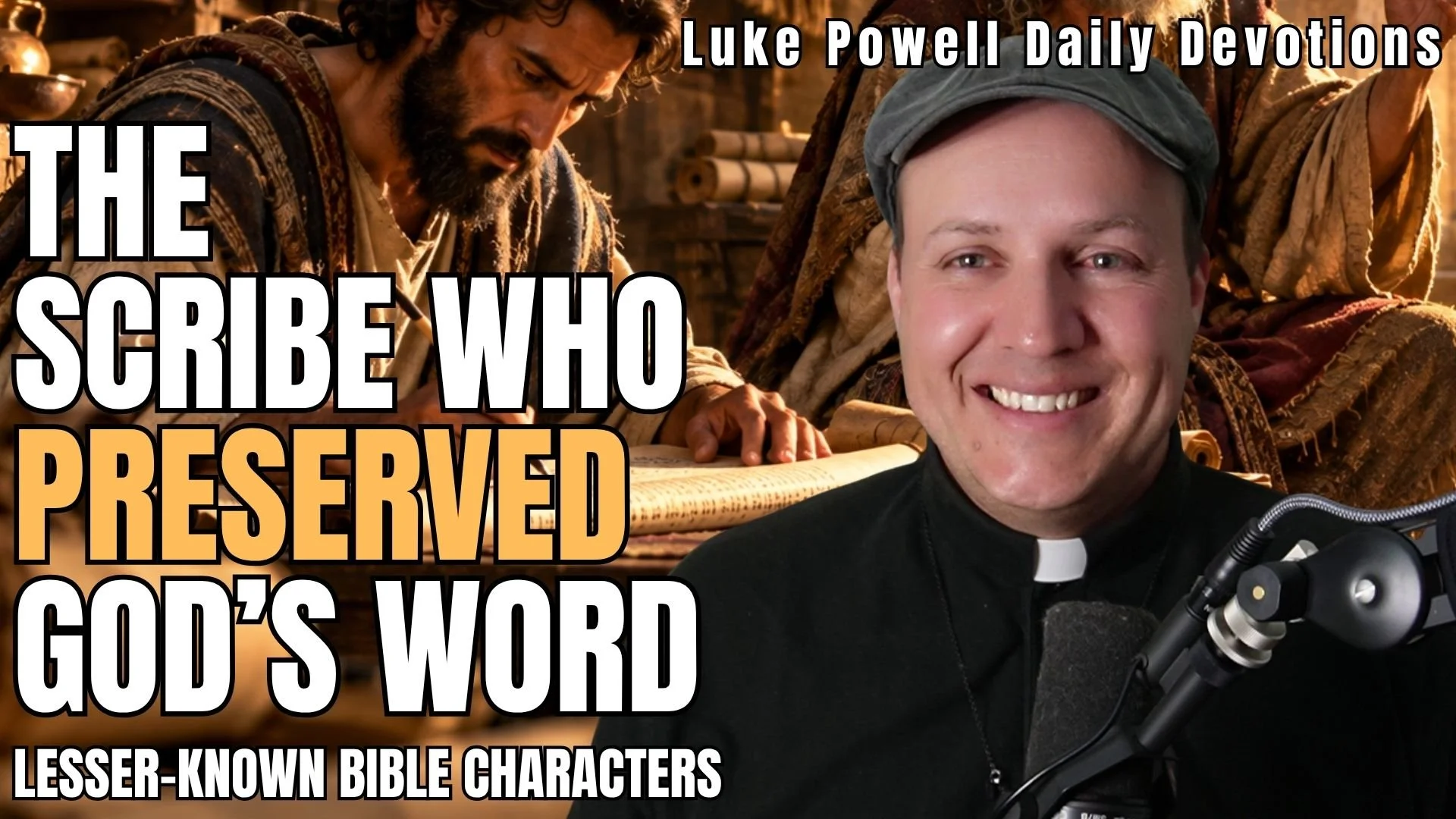
Let's look at another lesser-known Bible character from Hight C. Moore's little book Points For Emphasis. Today we'll consider Baruch the Scribe, who was a trusted friend of the prophet Jeremiah.
It was Baruch who wrote down the words that Jeremiah prophesied, as we read in Jeremiah 36:4: "Jeremiah called Baruch son of Neriah, and while Jeremiah dictated all the words the LORD had spoken to him, Baruch wrote them on the scroll."
When a King Tried to Destroy God's Word
Jeremiah then tells Baruch to go and read his words to the people of Judah, since he himself had been banned from the temple. This had such an effect on the people that the officials in the royal palace heard about it, and asked Baruch to come and read the words to them too. They decided to bring the scroll to the king himself, but sadly, we read this: "Whenever Jehudi had read three or four columns of the scroll, the king cut them off with a scribe's knife and threw them into the firepot, until the entire scroll was burned in the fire. The king and all his attendants who heard all these words showed no fear, nor did they tear their clothes."
But Baruch was undeterred, and he simply rewrote all of Jeremiah's words, and some new ones too, on another scroll.
Five Lessons From a Faithful Scribe
Moore points out a few lessons for us in this story. First, we have here a picture of the inspiration of the Bible. We believe that God inspired Jeremiah's words, and Baruch then wrote them down, and they were still the words of the Lord. When you pick up a Bible, you are not just reading some ramblings of primitive people. You are reading the inspired Word of God, who spoke through His prophets and scribes so that His word could be preserved.
Second, we have a good picture of the proclamation of the Bible. Baruch reading out the words from the scrolls to the gathered people of God is a picture of what we do at church. Of course, we can hear the Word of God proclaimed and explained via books, audio, video, and various other media sources today. But there is something powerful about gathering to hear the Word read and proclaimed.
This is why at our church, when we read our main reading from Scripture for the day, we always say "This is the Word of the Lord: Thanks be to God". It's a little ritual that helps us remember - this is God's inspired Word that we've just heard.
The third lesson is that the Word spreads! Notice how Baruch's reading the scroll impacted the lives of the group listening first, and then spread - to the officials, to the king even. The Bible has a way of spreading and spreading as we read and preach it week by week, day by day.
But, fourth, there are those who seek to mutilate the Bible. Maybe not physically like this king did, but they cut it to shreds in their own way, disbelieving it, speaking against it, casting doubt about it. Yet, fifth, the Bible keeps being preserved despite people's attempts to destroy it.
Don't take lightly the works of people like Baruch who wrote the Word of God down on scrolls to be preserved. Don't be alarmed when people try to destroy the Bible's usefulness, authenticity, and reliability. The Scriptures will be around long after you and I are gone. Keep living your life by these words! Thank God for the Baruchs of the world who gave us these writings to live by.




Bezalel and Oholiab show that God uses people according to both their gifting and their willingness to work together. Identify where you are skilled, and either lead or serve with grace this week