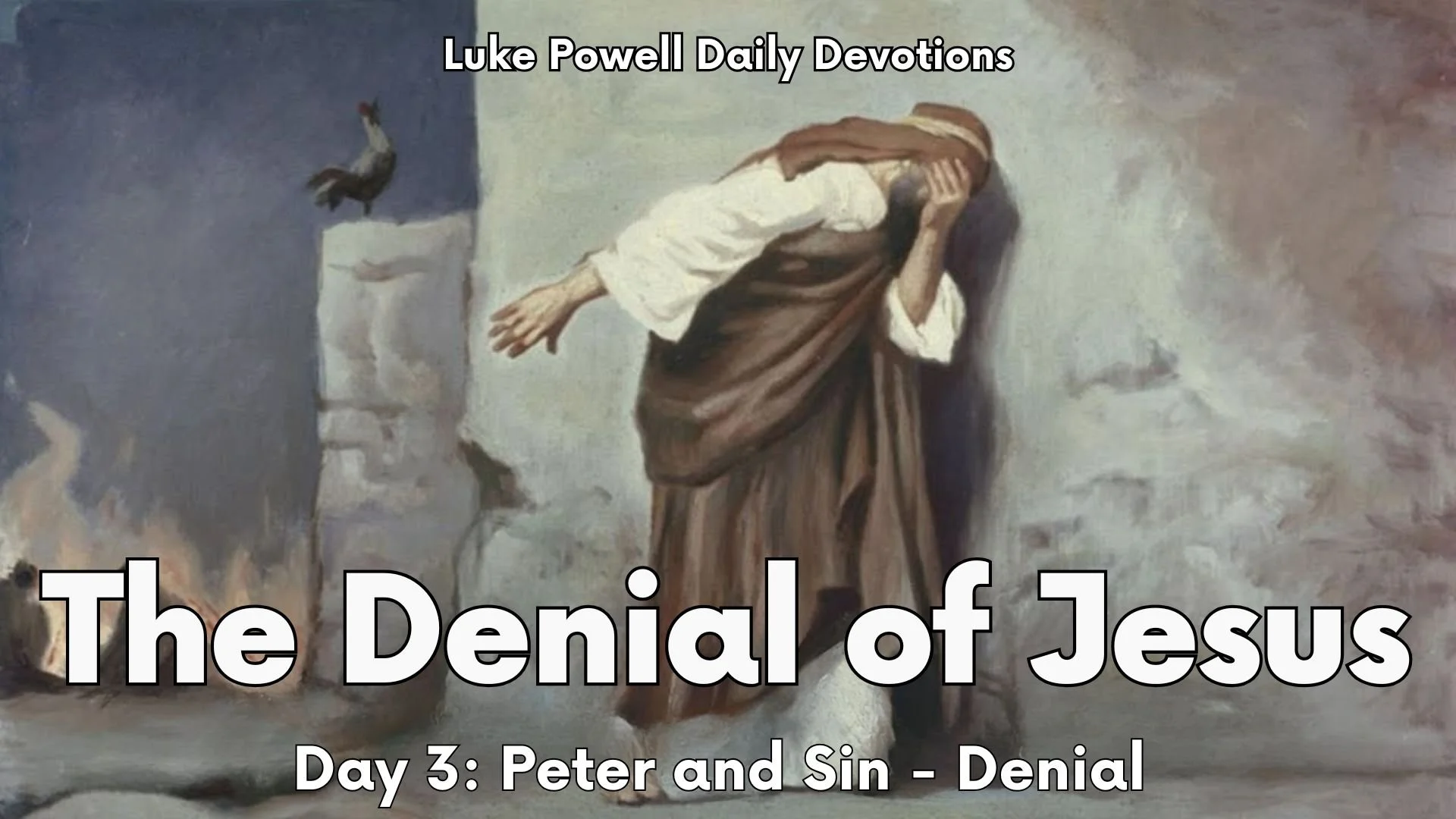
Peter fell into sin when he kept his distance from Jesus instead of keeping close to Him. What happened following that is Peter mixing up his denials.
Mixing Our Denials
That's a strange sentence! Let me explain.
Jesus said this: "Whoever wants to be my disciple must deny themselves and take up their cross and follow me." (Matthew 16:24 NIV11)
We're called to a life of denial. But it's a life of self-denial. It's a life of complete obedience to the ways of Jesus, even if it means we are denied things in the process.
Peter should have denied himself in that moment, but in the end he denied Jesus.
Self-Denial or Saviour-Denial?
That's what sin is, when you choose to deny your Saviour instead of denying yourself when temptation comes.
Mostly when we think about denying our faith, we think of moments where we don't stand up for Jesus in front of others. Peter had people asking him about his connection to Jesus and he denied it. That's a real temptation for many of us. At home, at work, with friends, we downplay our connection to Jesus, or perhaps deny it outright, in order to save face and stay liked by others.
But here's a thought: isn't every temptation, essentially, the enemy asking you to deny Jesus? I think every temptation is the enemy saying: will you do it God's way, or your way? Don't deny yourself, the enemy says, treat yourself! Before we know it, we've denied Jesus instead of denying ourselves.
Think about your own life, your own walk of faith. Is it filled with self-denial, or Saviour-denial? Do you have your denials mixed up, and do you often deny your Saviour in the way you live? Or do you have self-denial built into your way of life, and when temptation comes and the tempter whispers, you resist him and keep your relationship with Jesus strong?
Peter's Mistake
Peter's mistake was to deny Jesus instead of denying himself.
May it be that you and I don't fall into the same trap he did.

Paul tells Timothy to treat everyone in the church as he would his own father, mother, brother or sister. Pick one person this week - at church or at home - and speak to them with the respect you have been withholding.
Paul tells Timothy that physical training has some value, but training yourself in godliness is what truly counts, for this life and the next.
God calls every believer to a life of integrity, not just those in church leadership.
Paul doesn't only call us to modesty, but also to dress with decency - not drawing attention to our bodies. Ask yourself honestly today whether your clothing draws people's eyes to your character, or to your body.
Peter denied Jesus instead of denying himself and taking up his cross. Do we do the same?
When things don’t go Herod’s way, he responds in anger. Christians handle things differently.
Just because the Spirit is the one who empowers us, doesn’t mean that we have no responsibility. We are called to do the work of resisting temptation, in the power of the Spirit.
The speaker has incorporated a daily practice of reciting "I Am" statements to reinforce discipline and prioritize actions aligned with their principles and faith over fleeting impulses. These statements help them stay on track, remain faithful, and live a purposeful life. They emphasize the importance of self-discipline in achieving one's potential and not succumbing to momentary desires. The practice is inspired by the book "The Disciplined Life" by Richard Taylor and aims to encourage others to adopt a similar approach to stay grounded in their beliefs and values.
In 1 Thessalonians 5:14, Paul advises being patient with everyone as part of doing good. This patience is crucial even when dealing with frustrating situations or confronting others, but it doesn't mean enabling laziness. Patience may be challenging, but its rewards are sweet. The message is to strive to emulate Jesus' patience and approach interactions with grace and patience.
In Proverbs and Matthew, we're urged to guard our speech. Our words can either reflect Christ's love or defile us. As Christians, we should choose our words carefully and speak with love and compassion, striving to be Christlike in our speech.
Solomon's Proverbs 4:23 and Susanna Wesley's wisdom stress the vital need to safeguard your heart from influences that can erode your faith and love for God, emphasizing the importance of maintaining a vibrant and devoted spiritual connection.
Satan always tries to downplay the seriousness of sin – but God always calls us to repentance and holiness.
How do you use your body? For your own pleasure? Or for the glory of God?
Paul calls older women—and all believers—to live reverently, avoid gossip, and not overindulge. True fulfillment isn't found in skinner or wine, but in the Spirit-filled life Jesus offers us.
Paul's warning to the widows about idleness and slander is a warning to all of us about holding part of our lives back from Christ.